Kojima takes reservations through Tock. The restaurant has not publicly posted a dependable release time, booking window, party-size limit, deposit rule, or cancellation policy that we could verify, so the practical move is to check Tock as soon as your dates are firm and monitor for cancellations if the counter is sold out.
That small supply now meets much bigger demand. Kojima earned one Michelin star in the 2026 California guide, turning Hayato Kojima's intimate Sawtelle counter into a more urgent Los Angeles reservation.
Booking facts last verified: September 13, 2026. Policies can change, so review the final terms shown on Tock before paying or confirming.
Kojima reservations at a glance
- Official booking platform: Tock
- Address: 2130 Sawtelle Boulevard, Suite 211, Los Angeles, California 90025
- Format: Chef-led Japanese kappo and omakase-style tasting menu
- Counter size: Widely reported as eight seats
- Full menu price: Reported at about $200 per person
- Short menu: A four-course, roughly $80 mini omakase has been reported when space is available
- Release schedule: Not publicly verified
- Booking window: Not publicly verified
- Deposit or prepayment: Not publicly verified
- Cancellation terms: Not publicly verified
- Walk-ins: Reported for the shorter menu when seats remain, but not confirmed as a guaranteed nightly policy
If Kojima is unavailable, browse the Los Angeles restaurant hub for other booking options. For a sold-out date, Resto Mojo's restaurant reservation concierge can monitor supported reservation platforms for an opening, but no table is guaranteed.
Why Kojima is more competitive in 2026
The timely change is Michelin recognition. Michelin's 2026 California announcement elevated Kojima into the one-star group, while Eater Los Angeles included it among the city's new starred restaurants.
That attention matters more at an eight-seat counter than it would in a large dining room. A few additional parties can erase an evening's availability, especially on Friday and Saturday.
Google Search Console also shows early demand around the current page. From June 1 through September 9, 2026, the query "Kojima Los Angeles menu" appeared at an average position of 16. The page had no clicks from that query, which made a practical reservation and menu refresh more useful than publishing another overlapping Los Angeles roundup.
What kind of meal is Kojima?
Kojima is not a sushi-only omakase. The restaurant is better understood as a kappo-style counter where chef Hayato Kojima can move between raw fish, steamed dishes, grilling, frying, rice, soup, and dessert.
Michelin's restaurant listing emphasizes the chef-led, changing nature of the meal. The Infatuation similarly describes dinner as a trust fall, with the sequence changing according to product and the chef's decisions.
That variability is the point. Do not book expecting a fixed parade of famous signature dishes. Book because you want to sit close to the kitchen and let one chef shape the evening.
Kojima menu and price
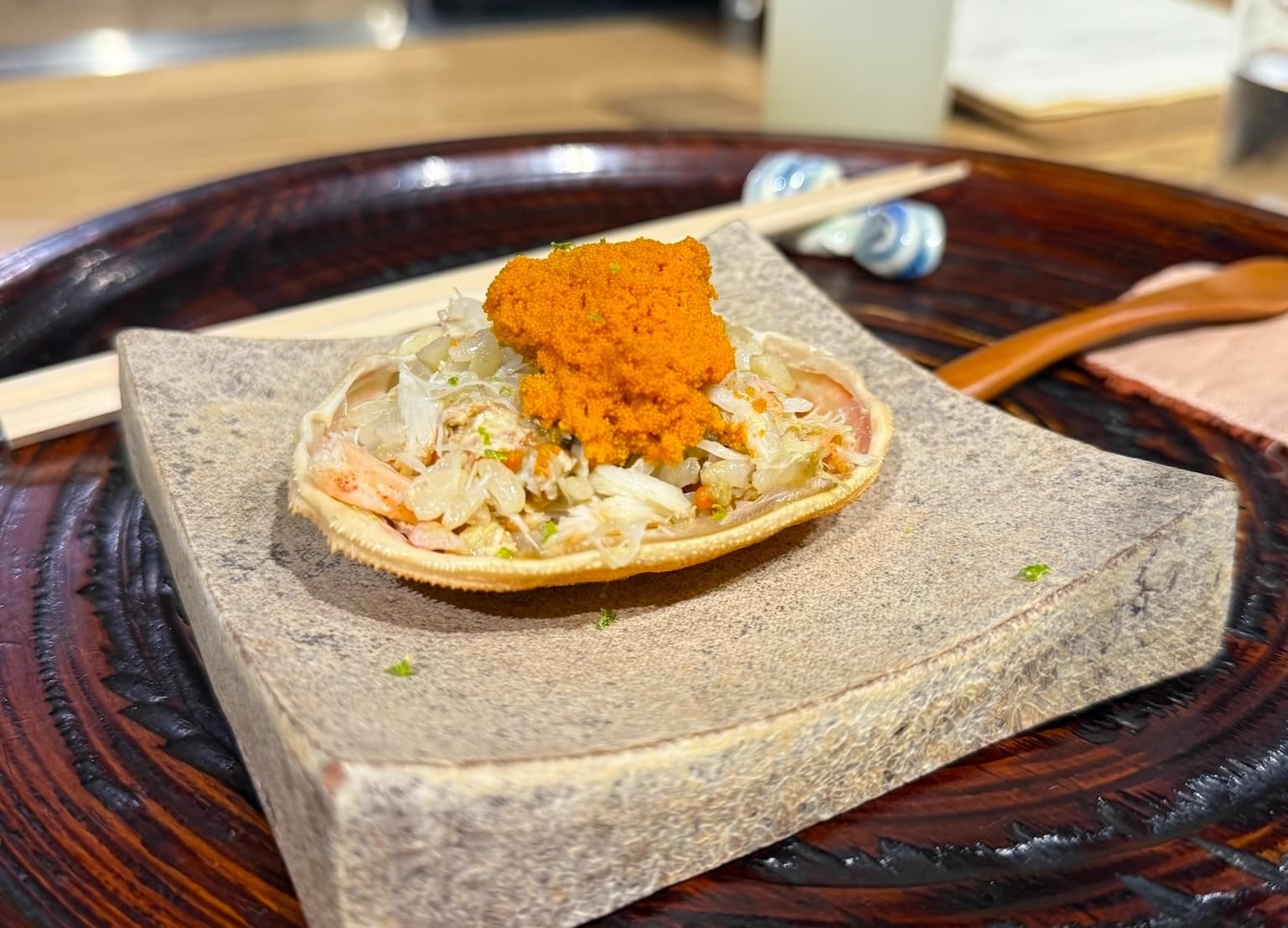
Recent coverage describes two useful ways to experience the restaurant. The full omakase is about $200 and is the destination meal, with a progression that can include sashimi, chawanmushi, grilled seafood, fried courses, donabe rice, soup, pickles, and dessert.
A shorter four-course mini omakase has been reported at about $80 when seats are available. Time Out Los Angeles and The Infatuation are useful current references for the format and price, but the menu changes. Treat every dish list as an example, not a promise.
The full menu makes the most sense for a special occasion, a serious Japanese-food dinner, or a solo counter experience. The shorter option is attractive for a more spontaneous visit, but relying on it is a gamble because availability is not guaranteed.
How to get a reservation at Kojima
Start with Tock
Use the Kojima Tock page, not a reseller or an unofficial concierge listing. Check the experience description and checkout terms carefully because the restaurant does not expose all of its booking rules on a separate public policy page.
Search flexible dates and times
At an eight-seat counter, one party can materially change the calendar. Search weekdays, consider every available seating, and avoid making a single prime Saturday time your only acceptable outcome.
Watch for cancellations
A tasting-menu counter can reopen when a guest's plans change. Recheck Tock during the week before your desired date and again within the final 24 to 48 hours. An automated monitor can reduce manual refreshing when the platform and inventory are supported.
Do not invent a release time
Some Los Angeles restaurants release on a clean daily or monthly cadence. We could not verify one for Kojima. Until the restaurant publishes a schedule, advice to log in at a specific hour would be guesswork.
What remains uncertain
Public listings disagree about Kojima's operating days and hours. Check the live Tock calendar before planning transportation or a second stop.
We also could not verify an official online party-size cap, required deposit, prepayment amount, cancellation deadline, late-cancellation fee, grace period, dietary-accommodation policy, or dress code. Those omissions are important for a tasting menu, so read the terms presented during checkout and contact the restaurant before booking if an allergy or timing issue could affect the meal.
The reported walk-in mini omakase is best treated as a possibility, not a fallback you can count on. If the trip matters, reserve the full experience rather than arriving with an eight-seat room as your entire plan.
FAQ
Does Kojima take reservations?
Yes. Use the restaurant's Tock booking page.
When does Kojima release reservations?
Kojima has not published an exact release cadence, time, or time zone that we could verify as of September 13, 2026. Check Tock regularly and search flexible dates.
How much is Kojima?
The full omakase is reported at about $200 per person. A shorter four-course menu has been reported at about $80 when available. Confirm current pricing on Tock before booking.
Can you walk into Kojima?
Some current coverage reports walk-in access to the shorter menu when seats remain. Because the counter has only about eight seats and no guaranteed walk-in allocation is published, do not depend on it for an important night.
Is Kojima Michelin starred?
Yes. Kojima received one star in the 2026 Michelin Guide California.
Is Kojima the same as a sushi omakase?
No. The meal is broader than sushi and uses multiple cooked techniques in a kappo-style tasting progression.
What should I do if Kojima is sold out?
Keep checking Tock for cancellations, widen your date and time range, and consider monitoring supported inventory through Resto Mojo. Monitoring improves your chances of seeing an opening, but it does not guarantee a reservation.
When reservations are gone
Let Resto Mojo keep checking for the table.
Choose the restaurant, date, party size, and time range. Resto Mojo monitors supported booking platforms and can book when a matching opening appears.