Saam matters before it has even fully opened because San Francisco almost never gets this kind of Thai chef arrival.
The San Francisco Chronicle's opening report confirmed that Thitid "Ton" Tassanakajohn is bringing his first U.S. restaurant to SoMa in late July. That alone would have been enough to draw attention. Ton is the chef behind Le Du and Nusara, two Bangkok restaurants that sit in the Michelin conversation and on Asia's 50 Best Restaurants.
What makes Saam more interesting is that it is not arriving as another precious tasting-menu export. The Chronicle reports that Saam will be casual, a la carte, and built around Thai family-style sharing. That gives San Francisco a much more useful question than "is this famous?" The real question is how fast it will turn into a reservation problem once people realize it is both serious and actually fun to book.
Why Saam Stands Out Right Now
There are plenty of restaurant openings that are only big because of marketing volume. Saam does not feel like one of them.
Its urgency comes from contrast. Ton built his reputation in a fine-dining world, but this restaurant is intentionally stepping away from the format that most Americans would expect from a chef with Michelin credentials. Instead of chasing the same lane as Kin Khao or Nari, Saam is supposed to feel looser, more communal, and easier to fold into regular city dining.
That decision matters in San Francisco. People here will absolutely chase a chef-name opening, but the restaurants that keep real momentum are the ones that solve an actual dining need after the launch-week frenzy wears off. A sharable Thai room in SoMa from a globally known chef sounds like it could do exactly that.
The Chef Story Behind Saam
Ton's background explains why people are already watching this opening so closely.
According to the Chronicle, he grew up in Bangkok, worked first as an investment banker, then changed course and attended the Culinary Institute of America in New York. After that he cooked at restaurants including Eleven Madison Park, Jean-Georges, and the Modern before returning to Thailand and building his own restaurant group.
Le Du opened in 2013 and became one of the restaurants that helped define contemporary Thai fine dining for an international audience. The Chronicle notes that it eventually earned a Michelin star and reached No. 1 on Asia's 50 Best list. Nusara followed with a more tradition-facing tasting format and picked up Michelin status of its own.
That kind of résumé usually leads to a U.S. project that leans theatrical or ultra-structured. Saam seems to be doing the opposite.
The local partnership also matters. The Chronicle says Ton is opening Saam with Tee Atthapon, chef-owner of Daly City's Kan Kiin and San Francisco's Song Wat, plus Ty Choosuwan, an alum of Boulevard and Prospect. That pairing gives the project much more local operating credibility than a simple celebrity-chef licensing play.
What the Concept Actually Is
The easiest mistake would be to think "famous Thai chef" and assume a formal tasting counter.
That is not the pitch. Saam is described as an a la carte restaurant built around the way people actually eat together in Thailand: passing soups, vegetables, satay, rice, and meats across the table. That is a much more generous concept than a meal where everyone quietly receives identical courses in a fixed sequence.
It also makes Saam more relevant to how San Franciscans dine now. Group dinners matter. Flexible ordering matters. Being able to go with friends without turning the night into a three-hour ceremony matters.
If Saam executes on that promise, it could become one of those restaurants that works for visitors hunting a headline table and locals who simply want a high-upside dinner with enough structure to feel special but not stiff.
What To Order at Saam
The menu is still coming together publicly, so this is one of those moments where expectations matter more than checklists.
The Chronicle says diners should expect dishes like khao tod pakiem, fried rice balls filled with thick fish sauce and served with lettuce wraps. It also mentions a lineup that could include around four curries and mains such as marinated pork chops. That alone already tells you something useful about the meal.
This does not sound like a place where one showpiece item dominates everything else. It sounds like a table-building restaurant.
That means your smartest first visit is probably not a minimalist two-dish order. It is a broader spread:
- Start with at least one snack-style dish like the khao tod pakiem if it makes the opening menu.
- Add a curry or two so the table gets variety in texture and heat.
- Order at least one larger protein dish, especially if the pork chops make the final cut.
- Treat rice and vegetables as essential structure, not filler.
The bar sounds worth paying attention to as well. The Chronicle says Saam plans to pour Thai beers, wine, and sato, the lightly fizzy fermented sticky-rice drink associated with Isan. That is the kind of beverage detail that can push a restaurant from "chef opening" into "place with an actual point of view."
The Space and the Vibe
Saam is taking over the former Sun and Moon space at 415 Brannan Street in SoMa. That is useful for two reasons.
First, the neighborhood can support a restaurant that plays to both destination diners and people already in the area for work, events, or a downtown night out. Second, the Chronicle reports that the kitchen did not need major repairs, which usually helps an opening get moving with less chaos than a full ground-up build.
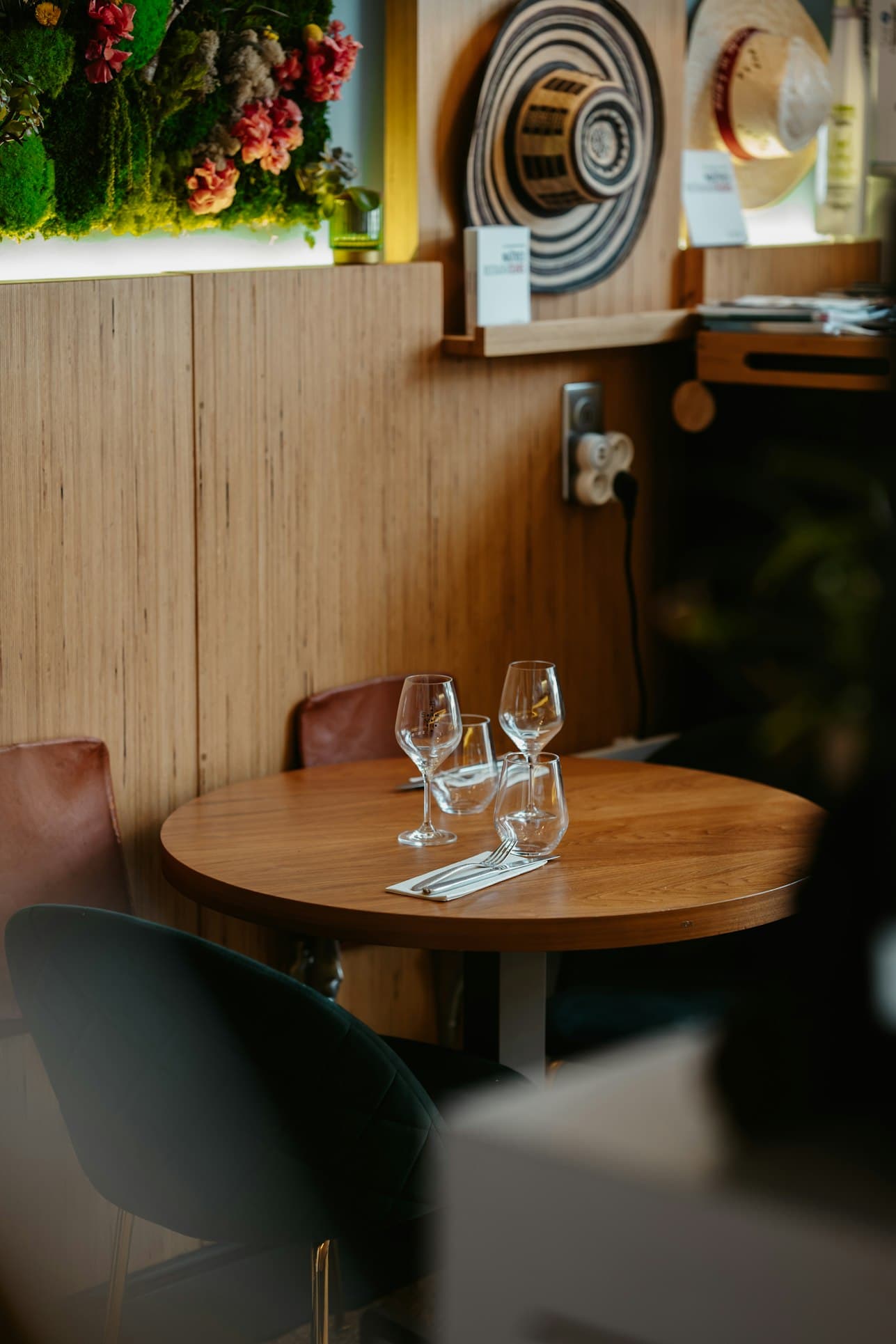
The room itself is being refreshed with wooden and clay artifacts from Thailand. That detail suggests something more tactile and rooted than generic hotel-restaurant minimalism.
What you should want from the vibe is not luxury theater. You should want warmth, movement, and enough energy that the family-style concept feels natural. If the room lands there, Saam could become one of those rare places that satisfies ambitious food people without making everyone else feel as if they accidentally booked homework.
Reservation Strategy for Opening Month
This is the part that matters most for most readers, and the honest answer is that Saam is still in the pre-pattern stage.
As of now, there is no widely published long-term reservation playbook. That means the opening window is exactly when people tend to make avoidable mistakes.
What to expect
Expect the first release to move fast. Any San Francisco opening with this much chef gravity will get an immediate curiosity rush.
Expect group-size friction. Family-style restaurants often feel easiest to book at four, but those tables can become the hardest inventory to grab because they fit the concept so perfectly.
Expect demand to stay elevated beyond week one. Ton's name brings the initial wave, but the casual format may keep the second wave stronger than usual.
Best booking approach
Follow official channels immediately. The restaurant's Instagram is likely to be the fastest place to catch platform announcements, release timing, and opening updates.
Be ready for the booking system to evolve. New restaurants sometimes change table-release habits, walk-in balance, or service rhythm within the first month.
Stay flexible on party size and time. Early tables, later tables, and smaller groups often win the first month.
Use a monitoring mindset once the platform is clear. If Saam lands on Resy or OpenTable, this is exactly the type of restaurant that can become dramatically easier to catch through later inventory movement and cancellations than through the first public drop.
Who Saam Is Best For
Friends who want a shared-table dinner with real chef weight: This is the clearest use case.
Visitors planning one current San Francisco meal: If you want a restaurant that says something about where the city is right now, Saam has strong odds.
Thai-food regulars who care about range: It sounds built to show a different side of high-level Thai cooking than a formal tasting room.
It may be less ideal for diners who want a silent special-occasion room or a fully predictable menu before they commit. Saam's appeal is partly that it feels alive and a little unsettled in the best way.
What Critics and Industry Watchers Are Watching
The coverage so far is narrow but powerful.
The Chronicle's report is the key source because it explains both the chef story and the strategic twist toward casual dining. Eater SF's summer openings roundup adds the broader city context and highlights the opening as one of the Bay Area's most anticipated summer arrivals.
That combination creates an unusually strong setup. Saam is not just a chef headline. It is a chef headline attached to a format that sounds likely to generate repeat demand.
Practical Details
Address: 415 Brannan Street, San Francisco, CA 94107
Neighborhood: SoMa
Cuisine: Thai
Format: Casual, a la carte, family-style
Opening timing: Late July 2026, according to the Chronicle and Eater
Official updates: Saam Instagram
Major coverage: San Francisco Chronicle, Eater SF
Why Saam Could Matter Beyond Opening Week
A lot of splashy debuts are mostly useful as status news. Saam has a chance to matter in a more durable way.
If the menu is as shareable and energetic as it sounds, this could become a restaurant people actually build nights around instead of merely bragging about once. That is a different kind of value, and it is usually what turns an opening into a long-tail reservation problem.
San Francisco does not need more restaurants that are only important on paper. It needs more restaurants that make people want to come back. Saam sounds like it understands that.
FAQ
When is Saam opening in San Francisco?
Late July 2026, according to the San Francisco Chronicle and Eater SF.
Where is Saam in San Francisco?
Saam is opening at 415 Brannan Street in SoMa, in the former Sun and Moon space.
Who is the chef behind Saam?
The restaurant is the first U.S. project from Thai chef Ton Tassanakajohn, with local partners Tee Atthapon and Ty Choosuwan helping lead the San Francisco operation.
Will Saam be a tasting menu restaurant?
No. Current reporting says it will be a casual, a la carte, family-style restaurant rather than a formal tasting-menu experience.
What kind of food will Saam serve?
Expect Thai dishes built for sharing, including items like khao tod pakiem, curries, and mains such as marinated pork chops, plus Thai beers, wine, and sato.
Will Saam be hard to book?
Very likely during opening month. The chef pedigree is major, and the format sounds broad enough to sustain demand after the first wave.
When reservations are gone
Let Resto Mojo keep checking for the table.
Choose the restaurant, date, party size, and time range. Resto Mojo monitors supported booking platforms and can book when a matching opening appears.