Rosa y Marigold feels important for a reason that has nothing to do with fake urgency. It is not just new. It is one of those openings where you can see a local restaurant group stretching into a bigger room, a bigger audience, and a bigger version of its own voice without losing the personality that made people care in the first place.
That voice belongs to JuanMa Calderón and Maria Rondeau, the team behind Celeste in Somerville and La Royal in Cambridge. With Rosa y Marigold, they have opened their biggest project yet in Back Bay. Boston Magazine's opening story describes a 100-seat restaurant with live music, weekday lunch, weekend brunch, daily dinner, and a menu that balances classic Peruvian flavors with more expansive, modern framing.
That combination makes Rosa y Marigold one of the smartest Boston reservations to understand right now. It has opening buzz, yes. It also has something rarer: heart.
Why Rosa y Marigold matters in Boston right now
Boston gets plenty of new restaurants. It gets fewer that feel emotionally grounded from day one. Rosa y Marigold enters Back Bay not as a hotel-adjacent placeholder or a vague all-day concept but as a restaurant with lineage, authorship, and a point of view.
Calderón and Rondeau have already built trust locally through smaller-scale projects. This opening matters because it moves that credibility into Boston proper and gives them a bigger stage. According to Boston Magazine, the room is rooted in a community-building ethos while also pushing into bolder food, a packed all-day schedule, and a more ambitious footprint.
That makes Rosa y Marigold one of the most interesting openings in the city, not only for people who already love Peruvian food but for anyone who wants a restaurant that feels alive beyond the reservation itself.
The story behind the restaurant
The team story is one of the biggest reasons to care. Boston Magazine notes that Calderón and Rondeau began by hosting dinner parties in their Cambridge home before building out a small but respected group of Peruvian restaurants. Calderón is a Peruvian filmmaker turned chef. Rondeau is a Guatemalan architect who also serves as designer and general manager.
That pairing gives Rosa y Marigold a nice internal tension. The food is not separated from the room. The room is not separated from the story. You can feel how the concept was thought through as a whole.
The name itself comes from Marigold and Rose, the Louise Glück novel that inspired the project. That is a better clue than it may sound. Rosa y Marigold is interested in duality: day and night, old and new, tradition and reinterpretation, intimacy and scale.
What kind of restaurant is Rosa y Marigold?
It is a Peruvian restaurant, but that label still leaves a lot unsaid. Rosa y Marigold sounds built to work across several uses, which is one of its strengths. It can be lunch for someone in Back Bay. It can be a music-filled dinner. It can be brunch. It can be the place you take visitors when you want Boston to feel broader and more exciting than the usual safe options.
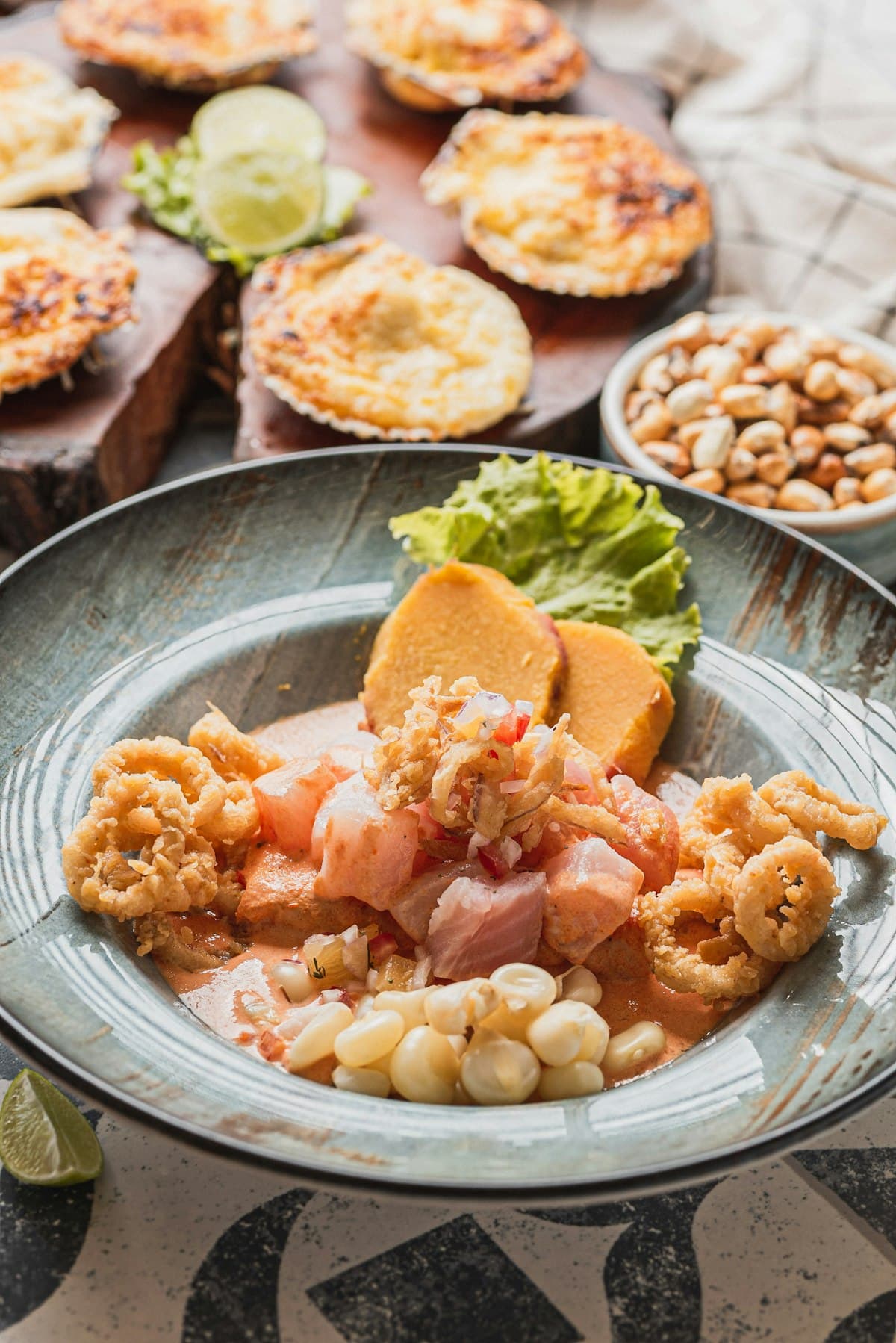
Boston Magazine describes a menu that ranges from classic ceviche and street-food-style anticuchos to modern spins on steak frites and asado. That breadth matters because it means the restaurant is not trapped in one narrow version of Peruvian food. It wants to be generous and legible without becoming generic.
That is a hard balance. When it works, it creates the kind of restaurant people actually return to.
What to order and where the menu seems strongest
The public coverage already gives enough detail to sketch a very promising meal. Boston Magazine's review of the opening mentions ceviche, anticuchos de corazón, Peruvian sandwiches for lunch, and an asado de costilla built from braised short rib with panca, mole, red wine reduction, and potato purée.
That sounds like the right way to think about the menu overall. Start with something bright and coastal, probably ceviche. Add a skewer or another smaller plate that leans into charcoal, spice, or offal. Then move into one of the more substantial dishes where Calderón can show the kitchen's depth.
The short rib asado feels especially important because it captures the restaurant's method. It is rooted in a traditional Peruvian dish, but plated and developed with more range and ambition. That is exactly the kind of reinterpretation you want from a larger, city-facing follow-up restaurant.
If you go for lunch, the sánguches seem like a good reason to use the restaurant differently from the average special-occasion dinner spot. If you go for dinner, the stronger play is probably to share across several categories and let the kitchen show contrast.
The room and the atmosphere
Scale changes everything. Rosa y Marigold has around 100 seats, which is much larger than the intimate feeling many diners associate with the group's earlier restaurants. Bigger, though, does not seem to mean colder.
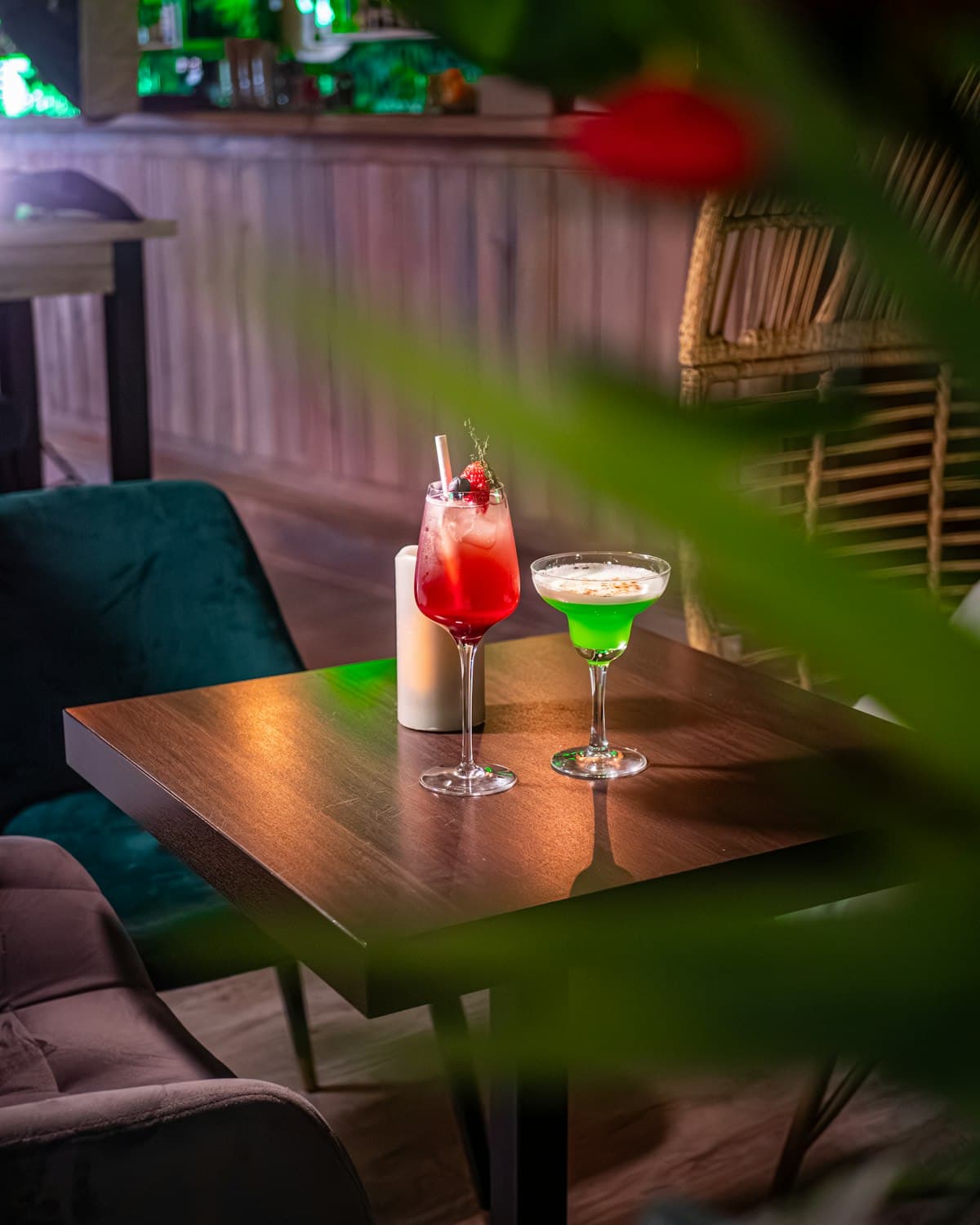
Boston Magazine emphasizes that the room still feels tied to joy and community. There is live music. There is design intention. There is a sense that the restaurant is trying to hold daytime ease and evening celebration in the same space.
That flexibility is a huge asset in Back Bay, where restaurants can easily become either too formal for repeat visits or too generic to matter. Rosa y Marigold sounds like it is aiming for something harder: a place with enough identity to feel special and enough openness to stay useful.
Reservation strategy
Rosa y Marigold has an official site at rosaymarigold.com and live listings on both Resy and OpenTable. That dual-platform presence is useful because it gives diners more ways to catch a table while the opening buzz is still sorting itself out.
The practical move depends on your goal. For a full dinner, book ahead rather than assuming a same-day opening will be easy. For lunch or brunch, the room's larger size may make access more manageable, especially once the first rush settles.
This also feels like a restaurant that could develop uneven pressure. Prime Friday and Saturday dinner slots may tighten quickly, while weekday lunch could remain an underused sweet spot. That is exactly the kind of pattern worth exploiting if you want the restaurant without the most painful reservation chase.
Who Rosa y Marigold is best for
Rosa y Marigold is ideal for diners who like restaurants with actual feeling behind them. It works for dates, visitors, and celebratory dinners, but it also works for people who want a meal that says something a little broader about where Boston dining is going.
It is especially strong if you are tired of interchangeable New American openings. The flavors, format, and story here seem more specific than that. It is also a good fit for groups with mixed priorities because the menu appears broad enough to satisfy comfort-seekers and more adventurous eaters in the same meal.
How it compares to other new Boston restaurants
Compared with Maple & Ash, Rosa y Marigold is less about overt spectacle and more about warmth. Compared with the Seaport's newer openings, it may feel more rooted and less engineered. Compared with smaller chef-led darlings, it has more range in how you can use it across dayparts and occasions.
That versatility is one of the strongest arguments in its favor. Rosa y Marigold does not need to win one narrow category. It just needs to become the restaurant people keep finding reasons to return to.
What critics and tastemakers are signaling
The opening press has been strong. Boston Magazine frames the restaurant as the team's biggest and bravest project yet. Boston.com highlighted it as one of 2026's most anticipated openings, and MassLive reported on the official opening.
That kind of coverage is useful because it confirms the restaurant is already drawing attention from well beyond its immediate neighborhood. But the more convincing signal is the restaurant's structure itself: a trusted team, a bigger room, an all-day format, and a menu with enough confidence to push past safest hits.
Practical details
Location: 400 Newbury Street, Boston
Neighborhood: Back Bay
Cuisine: Peruvian
Chef: JuanMa Calderón
Reservations: Resy and OpenTable
Official site: Rosa y Marigold
Best for: Dates, visitors, all-around dinner plans, lunch meetings, live-music nights
Vibe: Warm, ambitious, artistic, music-friendly, more soulful than stiff
Final verdict
Rosa y Marigold looks like one of Boston's most compelling spring openings because it offers more than novelty. It gives Back Bay a restaurant with clear authorship, strong flavor identity, and enough scale to become part of everyday city life rather than a one-week headline.
That matters. The best openings are not always the loudest ones. They are often the ones that make the city feel more complete.
Rosa y Marigold has a real chance to do that. If you want to try one of Boston's most interesting new restaurants before your group chat catches up, this is a smart table to book.
FAQ
What is Rosa y Marigold in Boston?
Rosa y Marigold is a new Back Bay Peruvian restaurant from the team behind Celeste and La Royal.
Where do you book Rosa y Marigold Boston?
You can book through Resy or OpenTable.
What kind of food does Rosa y Marigold serve?
The menu includes ceviche, anticuchos, Peruvian sandwiches, and larger dishes that reinterpret traditional Peruvian cooking.
Is Rosa y Marigold good for a special occasion?
Yes. It looks especially good for dates, celebratory dinners, and taking visitors somewhere that feels lively and distinctive.
Is Rosa y Marigold one of Boston's most important new openings in 2026?
Yes. The combination of team credibility, Back Bay visibility, and an ambitious larger-format concept makes it one of the city's more meaningful openings this spring.
When reservations are gone
Let Resto Mojo keep checking for the table.
Choose the restaurant, date, party size, and time range. Resto Mojo monitors supported booking platforms and can book when a matching opening appears.